
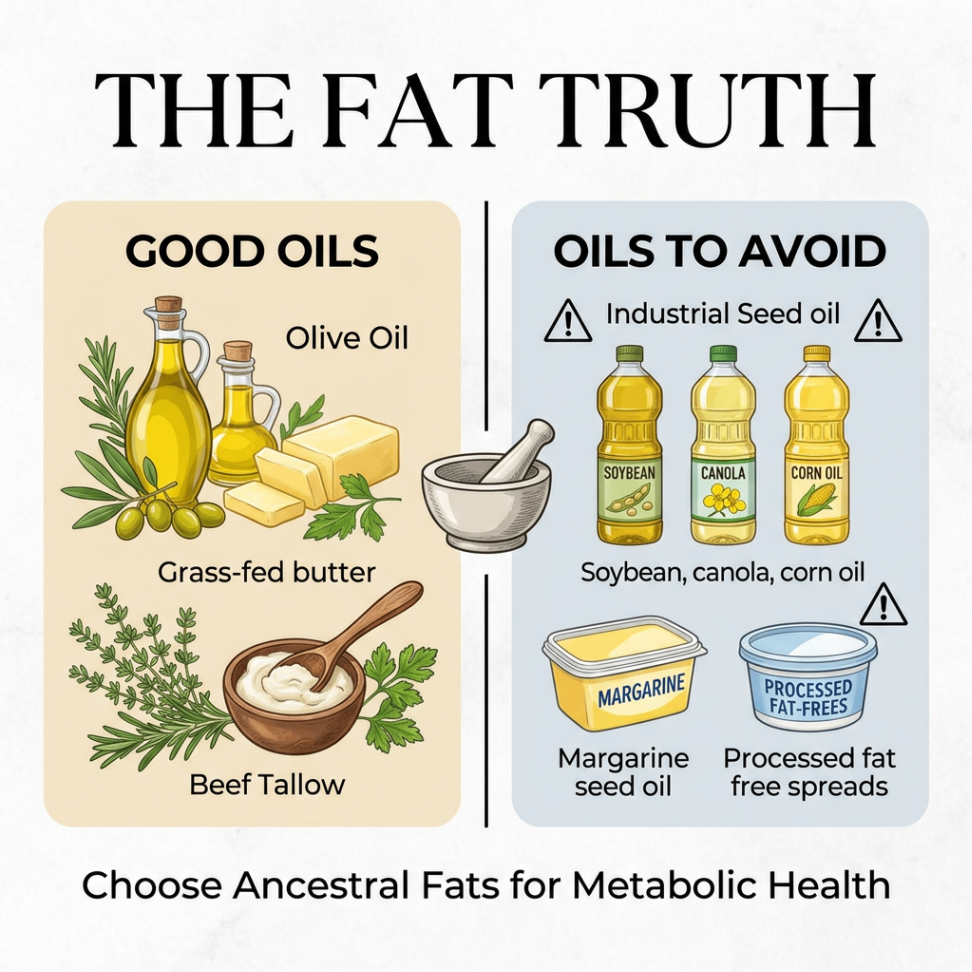
In the modern supermarket, we are surrounded by an endless aisle of liquid gold—bottles labeled as “heart-healthy,” “light,” or “vegetable-based.” For decades, nutrition authorities have steered us away from the nutrient-dense animal fats our ancestors thrived on for thousands of years, pushing us instead toward highly processed seed oils. But as rates of metabolic dysfunction, inflammation, and chronic disease continue to climb, a growing number of people are looking backward to move forward.
If you want to optimize your health, it is time to have a serious conversation about the oils in your pantry.
The Problem with Industrial Seed Oils
Seed oils—including soybean, canola, corn, cottonseed, and sunflower oil—are a relatively new addition to the human diet. These oils are typically extracted through high-heat, high-pressure industrial processes, often involving chemical solvents like hexane to maximize yield.
From an ancestral health perspective, these oils are problematic for two major reasons: their extreme concentration of polyunsaturated fatty acids (PUFAs) and their instability. PUFAs are highly prone to oxidation, meaning they break down and become rancid when exposed to heat, light, or oxygen. When you consume oils that are already oxidized, you are introducing oxidative stress directly into your system. Furthermore, these oils are typically rich in linoleic acid, an omega-6 fatty acid that, in excess, can promote systemic inflammation.
Beyond the Seed: What Else to Avoid
It isn’t just the obvious seed oils you need to be wary of. The food industry has mastered the art of creating "Frankenfats." Here are a few categories of fats that deserve a permanent spot in the "do not purchase" bin:
- Margarine and Shortening: These were created to mimic the texture of animal fats using chemical manipulation. Even without trans fats, they are almost always a blend of heavily refined, industrial seed oils designed to shelf-stable for years.
- "Fat-Free" or Emulsified Spreads: These are highly engineered products packed with fillers, gums, and soy lecithin. Your body was not designed to derive nutrition from emulsifiers and stabilizers.
- Highly Refined "Light" Olive Oil: If an olive oil is labeled "light," it has been processed to strip away its color and flavor. In doing so, you lose the antioxidants and polyphenols that define high-quality olive oil. Opt for the dark, earthy, extra-virgin version instead.
The Anchor of Ancestral Nutrition
If we aren't eating seed oils, what should we be eating? The answer lies in the fats that have sustained humanity for generations: saturated and monounsaturated fats.
Saturated fats, like tallow, lard, ghee, and butter, are stable at higher temperatures. They are the ideal fats for cooking because they don’t oxidize and turn rancid under heat. Fruit-based oils like extra virgin olive oil, cold-pressed avocado oil, and coconut oil serve as excellent, unrefined staples that provide a stable, nutrient-dense profile. When selecting these, prioritize quality—pasture-raised animal fats and single-origin, cold-pressed fruit oils provide a vastly superior nutrient density compared to their industrial counterparts.
A Simple Hack: The "Ancestral Anchor" Method
Walking down the grocery aisle can be overwhelming, especially when marketing teams are trying to confuse you. To make your life easier, use the "Ancestral Anchor" mnemonic to quickly determine if an oil is worth your investment.
Ask yourself: "Could my great-grandmother have extracted this?"
- A - Ancient: Is it a source that has been used for thousands of years? (Butter, Tallow, Lard, Olive, Coconut).
- N - Natural Extraction: Was it pressed, rendered, or churned without chemical solvents?
- C - Color & Character: Does it retain its natural smell, color, and flavor?
- H - High-Heat Stability: Does it hold up well during cooking? (Saturated fats pass this with flying colors).
- O - Only One Ingredient: Is the "ingredient" an animal or a fruit, rather than a seed that required an industrial complex to yield oil?
- R - Refinement Level: Is it "Extra Virgin" or raw? If it’s been "refined, bleached, or deodorized," put it back.
If the oil passes the ANCHOR test, it’s likely a staple you can feel good about using in your kitchen.
Final Thoughts
Your health is built on what you consume daily. By shifting away from industrialized seed oils and returning to the stable, traditional fats that humans evolved eating, you are taking a massive step toward better metabolic health.
Next time you are prepping a meal for your family, think about the history of the fuel you are using. Are you choosing the ephemeral, lab-created seed oils of the last century, or are you looking to the tried-and-true animal and fruit fats that have sustained us for millennia? Choose wisely; your body will thank you for it.