We have all been there: a text alert from the city or a notice on the news informing us that our local water supply is under a "boil water notice." The immediate reaction is to follow the instructions. We fill our pots, crank up the stove, and let the water bubble away, believing we are ensuring our family's safety.
But what if I told you that by following those instructions, you might be trading a biological threat for a chemical one?
Boil water notices are the government’s go-to solution because they are cheap, easy, and effective at neutralizing immediate biological pathogens like E. coli or Giardia. However, boiling is a blunt instrument. While it handles bacteria, it is completely ineffective—and sometimes counterproductive—against the complex chemical realities of modern municipal plumbing.
The Concentration Trap
The most fundamental issue with boiling is evaporation. When you boil water, you are essentially reducing the volume of the solvent while the solutes—the dissolved solids and minerals—remain behind.
If your water supply contains nitrates, lead, copper, or other heavy metals, boiling does not remove them. Instead, it concentrates them. By the time your "safe" water is finished boiling, you are left with a higher concentration of heavy metals per milliliter than you started with. This is particularly dangerous for infants and children who are more susceptible to the toxic effects of heavy metal exposure.
The Chemistry of Heat
Heating water isn't just a physical change; it’s a chemical catalyst. When you subject municipal water to high heat, you accelerate several concerning processes:
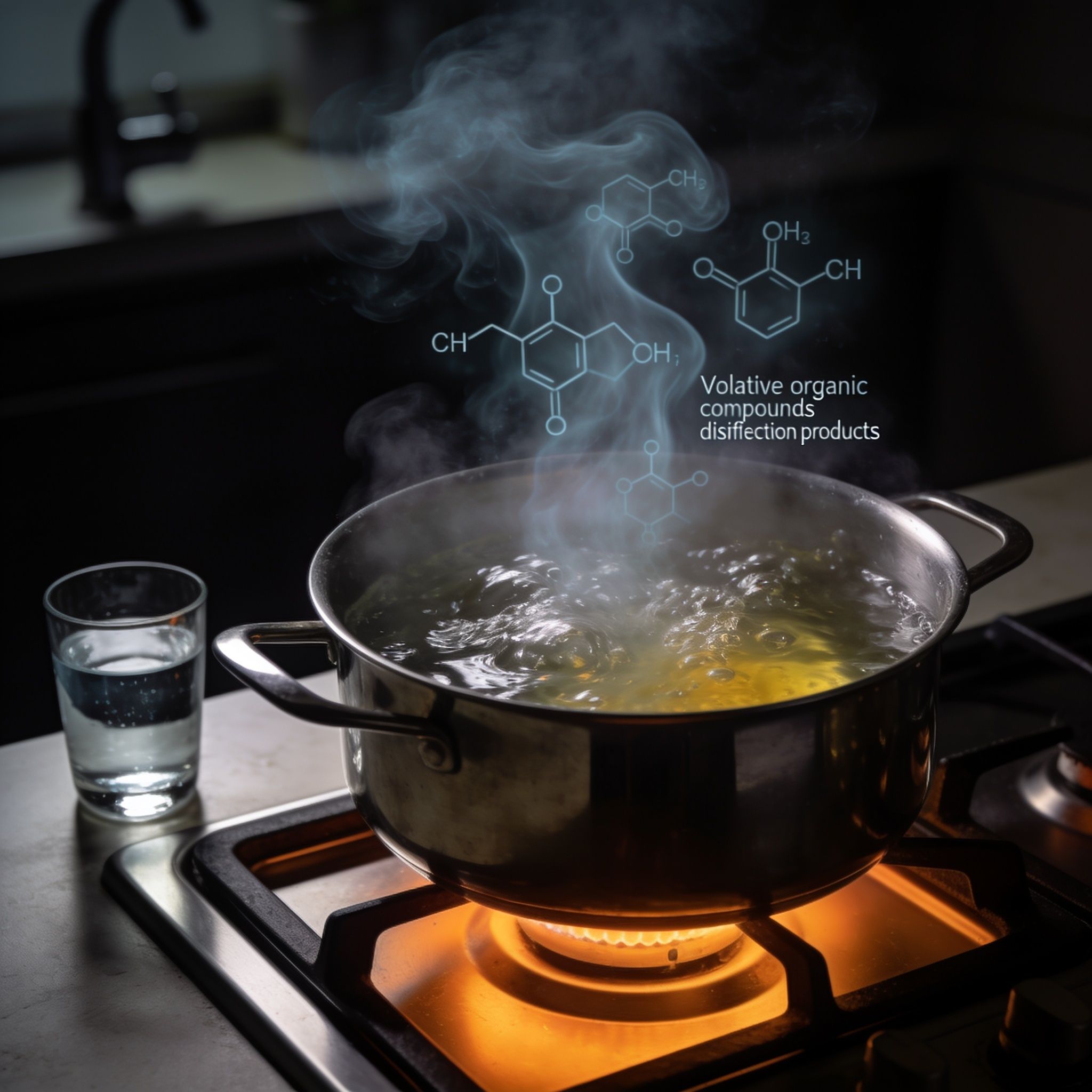
1. Disinfection Byproducts: Municipalities often respond to contamination alerts by "super-chlorinating" the system. When you boil heavily chlorinated water, you accelerate the reaction between chlorine and organic matter, creating a higher volume of Trihalomethanes (THMs). These are known carcinogens that you definitely don't want in your tea or coffee.
2. Increased Inhalation Risk: Many volatile organic compounds (VOCs) are released into the air as vapors when heated. Boiling water in an open pot turns your kitchen into an inhalation chamber for these volatile chemicals, meaning your lungs are doing the work your digestive system was supposed to avoid.
3. The "Forever Chemical" Problem: Substances like PFAS, which are increasingly common in city water supplies, are largely heat-stable. Boiling does absolutely nothing to remove them. You are simply consuming them in a more concentrated form.
The Myth of Purity
There is a persistent, dangerous myth that boiling "purifies" water. This couldn’t be further from the truth. Boiling is, at best, a thermal disinfectant. It does not address radiological contaminants, microplastics, or the myriad of pharmaceutical residues that are often found in modern tap water.
For those of us who value water quality—like our friends at Blue Jug who understand the importance of truly clean, remineralized water—a boil water notice isn't just an inconvenience; it’s a red flag. It is a sign that the local infrastructure is failing to provide a stable, safe product.
A Better Approach
If your municipality issues a boil water notice, the best advice isn't necessarily to boil the tap water. Instead, look for a secondary, reliable source of water like a Blue Jug that uses Reverse Osmosis to clean its water. If you must use tap water, at the very least, draw from the cold line and filter it through a system capable of removing the chemicals that boiling will only concentrate.
True health requires being proactive rather than reactive. Don't trust a government mandate to define what "clean" means for your body. When the system fails, take control of your own supply. Your health is too important to rely on the "boil-and-hope" method.